
By John Gordon, in partnership with Uncertainty Experts.
While the headlines debate whether AI will replace everyone or no one, something quieter is happening in the infrastructure. Three technical convergences have settled into place over the past 18 months. They are not speculative. They are observable in production code, published standards, and open-source repositories you can read today.
The world's most prominent technologists and economists disagree violently about what these convergences mean. But here is the thing most people miss: the disagreement itself is the problem. When the smartest people on the planet contradict each other in public, the rational response is not to pick a side. It is to freeze. And that is exactly what most L&D teams are doing.
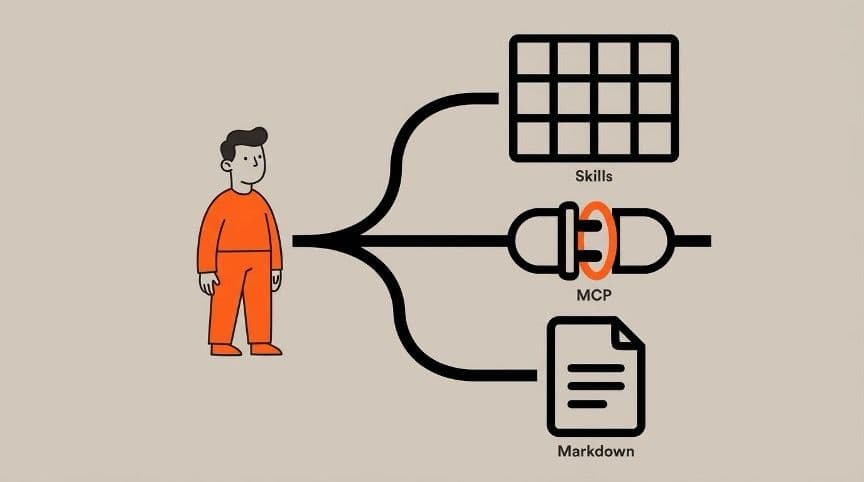
This article maps the disagreement, then walks through the three pillars: Skills, MCP, and Markdown. Each connects to one of the behavioural states from Article 1: Fear, Fog, and Stasis (identified through Uncertainty Experts' research with UCL).
The thought leader spectrum
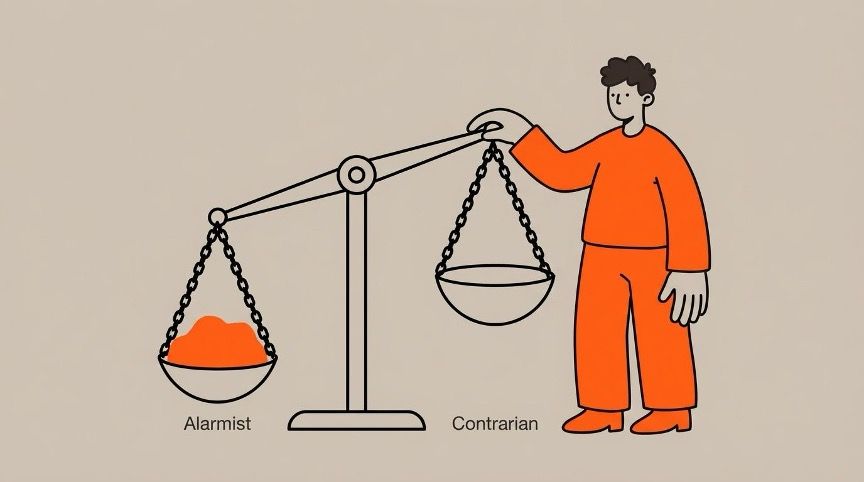
At the alarmist end, Dario Amodei, CEO of Anthropic, speaks of a "duty and obligation to be honest" about AI's trajectory. Kai-Fu Lee projects 50% of jobs displaced by 2027. Kristalina Georgieva at the IMF calls it a "tsunami," with 60% of jobs in advanced economies affected.
In the moderate centre, Sam Altman warns "AI washing is real." Marc Benioff says Salesforce will hire no more engineers, citing 30 to 50% productivity gains. The WEF projects 92 million roles displaced but 170 million created, a net gain of 78 million.
The pragmatic optimists focus on action. Jensen Huang: you will lose your job not to AI, but to "someone who uses AI." PwC's Global AI Jobs Barometer reports a 25% wage premium for professionals with AI skills.
The contrarians push back. Yale Budget Lab found no significant displacement yet.
Four positions. One point of agreement: skills are the differentiator. Not tools. Not strategy documents. Not AI policies. Skills.
Pillar 1: Skills, and why they connect to Fear
Something remarkable happened between August and December 2025. Major AI platforms converged, independently, on the same concept: skills defined as structured, portable, reusable units. OpenAI created AGENTS.md in August 2025. Anthropic introduced SKILL.md in October 2025. By December, both had been donated to the Linux Foundation. Claude Code, Cursor, GitHub Copilot, and Goose all now support structured skill definitions.
This is not a coincidence. It is infrastructure settling.
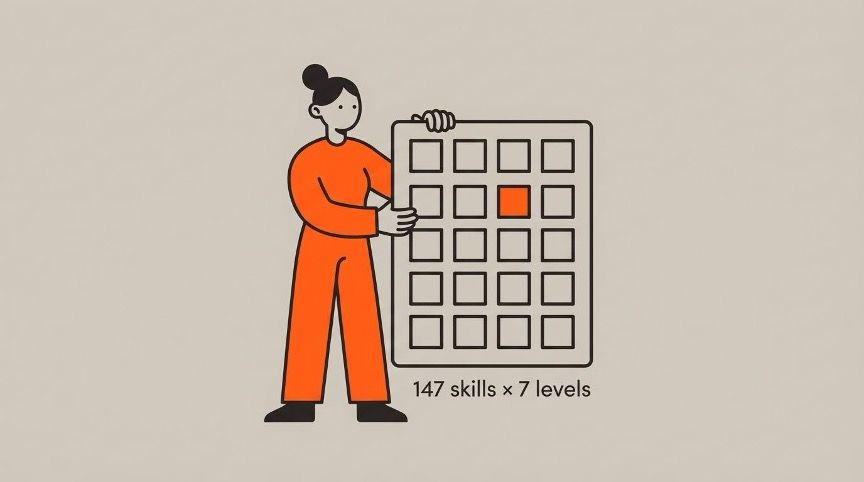
It matters because skills already have an established vocabulary. SFIA 9, published in October 2024, describes 147 skills across seven levels, used in nearly 200 countries. Finer Vision's AI Skill Packs organise AI capability into 25 packs containing 100 skills, each mapped back to SFIA 9.
When AI capability is described in the same language as human capability, the comparison becomes measurable. Stanford researchers using ADP payroll data documented a 13% decline in entry-level hiring in AI-exposed roles. That is the Fear data point. But PwC's 25% wage premium tells the other side: professionals who build skills proactively are pulling ahead. Fear becomes rational when capability is measurable. It becomes manageable when you have a framework for building it.
Pillar 2: MCP, and why it connects to Fog
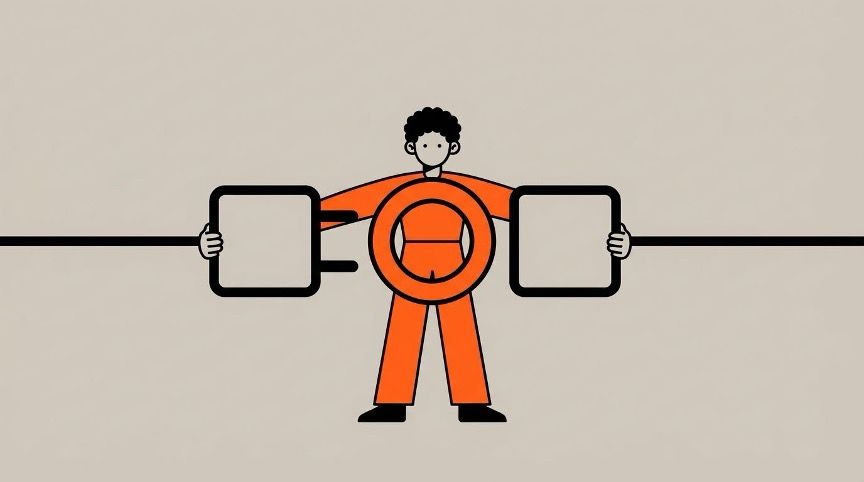
MCP, the Model Context Protocol, is best understood as "the USB-C port for AI applications." Anthropic open-sourced it in November 2024. By December 2025, it was donated to the Linux Foundation. Claude, ChatGPT, VS Code, Cursor, and Gemini all support it. A skill built using MCP works across any of them.
Learn once, use everywhere. That should simplify things. In practice, it has done the opposite.
MCP accelerates the rate at which new integrations appear. BCG's AI at Work report revealed a "silicon ceiling": 72% of leaders reported confident AI adoption, but only 51% of frontline staff agreed. The same report found 54% using unapproved AI tools, while only 36% have received any training. The tools are multiplying. The capability is not keeping up.
The answer is not to evaluate every new integration. It is to organise around skills, not tools. Skills persist. Tools change. If your team spent last quarter evaluating six AI platforms, they were solving the wrong problem.
Pillar 3: Markdown, and why it connects to Stasis
AGENTS.md defines how AI agents describe their capabilities. SKILL.md defines how skills are structured. GitHub's agentic workflows use the same format. The pattern is consistent: every major agentic framework is converging on human-readable, vendor-neutral text. Not code. Not proprietary formats. Plain Markdown.
For L&D professionals, this changes the equation. Writing structured instructions for AI agents is a communication skill, not a coding skill. The barrier is lower than most people assume. Much lower.
This is where Stasis lives. The path forward is visible, documented, and written in plain language. The gap is not between those who understand technology and those who do not. It is between those who have structured their capability and those still running disconnected pilots. The WEF projects 39% of skills obsolete by 2030. That is 48 months from now. The window for building structured capability is narrowing fast.
Why this matters for your team
Three pillars. Three problems. Skills make AI capability measurable, and that is why they trigger Fear. MCP solves fragmentation but accelerates visible complexity, which feeds Fog. Markdown makes the path accessible, which makes inaction harder to justify, and that is Stasis.
Each of the next three articles goes deeper into one of these states. Article 3 asks why your team is afraid, even when the data says skills are the answer. Article 4 examines why teams drown in evaluation and never start. Article 5 calculates the cost of agreeing AI matters and then doing nothing about it.
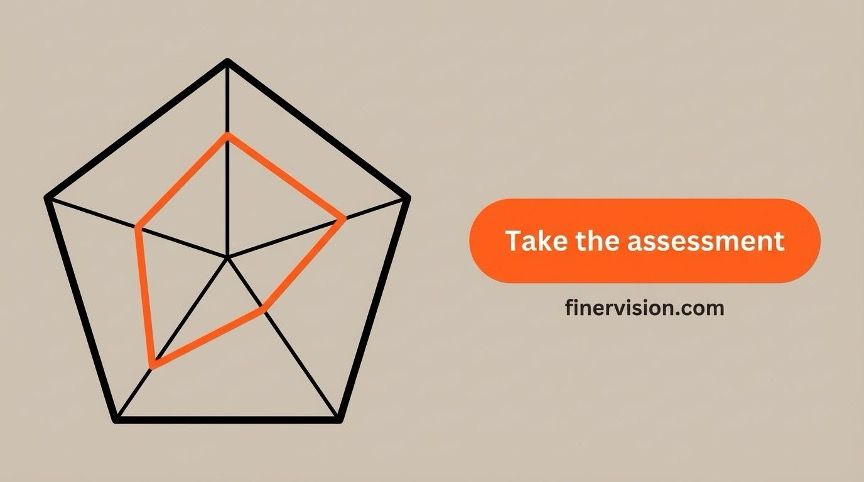
The Finer Vision AI Maturity Assessment is free and takes 10 minutes. It maps where your team sits across Fear, Fog, and Stasis and identifies which AI Skill Packs to prioritise.
Take the free AI Maturity Assessment at finervision.com/assessment
References
1. Amodei, D. (May 2025). Axios interview. "Duty and obligation to be honest."
2. Lee, K-F. 50% job displacement by 2027.
3. Georgieva, K. (January 2026). WEF Davos speech. "Tsunami." 60% affected.
4. Altman, S. (February 2026). India AI Impact Summit. "AI washing is real."
5. Benioff, M. (December 2024). 20VC podcast, no more engineers. (June 2025) Bloomberg, 30-50% productivity gains.
6. World Economic Forum (January 2025). Future of Jobs Report 2025. 92M displaced, 170M created. 39% skills obsolete by 2030.
7. Huang, J. (May 2025). Milken Institute. "Lose your job to someone who uses AI."
8. PwC / Burning Glass Institute. Global AI Jobs Barometer. 25% wage premium for AI-skilled professionals.
9. Yale Budget Lab (October 2025). No significant displacement yet.
10. Anthropic (October 2025). SKILL.md introduced. Open standard (December 2025).
11. OpenAI (August 2025). AGENTS.md. Donated to Linux Foundation AAIF (December 2025).
12. Anthropic (November 2024). MCP open-sourced. Linux Foundation (December 2025).
13. SFIA Foundation (October 2024). SFIA 9. 147 skills, 7 levels, nearly 200 countries.
14. Brynjolfsson et al. (August 2025). Stanford / ADP payroll data. 13% entry-level hiring decline.
15. BCG (June 2025). AI at Work 2025. 72% leaders, 51% frontline. 54% shadow AI, 36% trained.
16. Uncertainty Experts / UCL. Fear, Fog, Stasis behavioural patterns.